
A Candle for the Table: Notes on Dining by Candlelight
A candle at dinner is not decoration. A note on choosing scents that flatter food, the vessels that hold them, and the difference between atmosphere and interference.
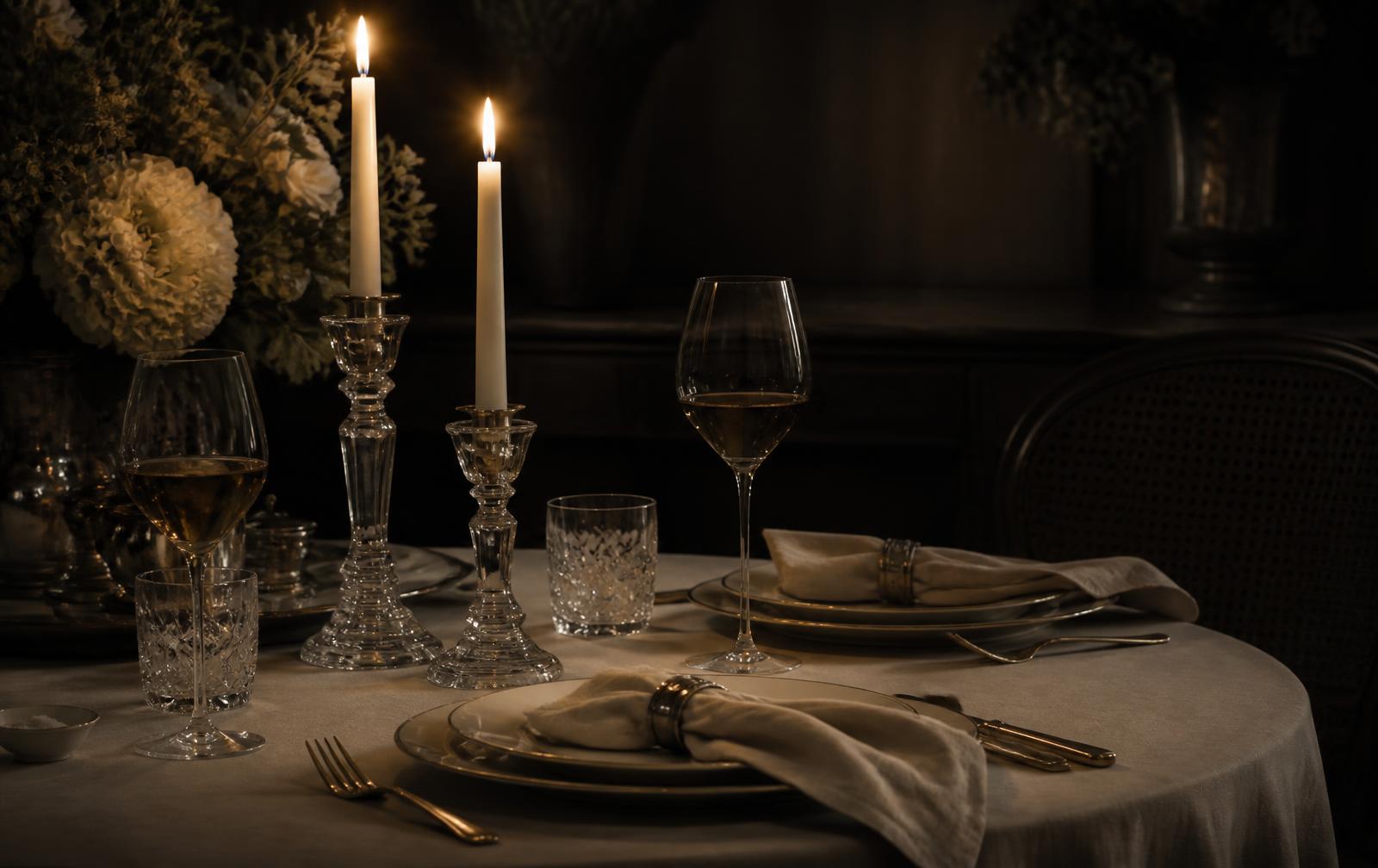
A candle on a dining table is a small act of generosity. It is also a chemical one. The same flame that softens the room is releasing molecules into the air that will meet the food, the wine, and the people, and not every scent survives that meeting.
The rule we keep is simple. A dinner candle should support the table, not narrate it. The fragrance should arrive as atmosphere, the way a dimmed light or a linen napkin does, and never as a flavor. The moment a guest can name the candle from across the room, the candle is doing too much.
This rules out most of the heavy hitters. Tobacco, leather, deep amber, the resins we love in a study or a library, all of them want to be the only thing in the room. They are not dinner candles. They are after-dinner candles, poured for the hour when the plates are cleared and the conversation has gone long.
For the table itself we reach for the green and herbal families. Juniper and cypress, read sharp and clean, almost like a cold walk before the meal, and they disappear behind the food without a fight. Winter sage is the quietest version of the same idea, herbal rather than sweet, the scent of a kitchen rather than a candle shop. A light citrus, something with bergamot in the top, will read bright and short and leave the palate alone.
What we avoid at the table is anything sweet. Vanilla, baked goods, the gourmand family. They compete directly with dessert and they win, which is not what you want from a candle at the start of a meal. Save them for the coffee course, or for the morning after.
The vessel matters as much as the scent. A dinner candle should be low and steady, not tall and flickering. We like cut crystal and sterling for the table because they hold the flame still and throw light into the facets, which is the whole point of candlelight at dinner. Brass is too warm for a meal, it pulls the eye down. Porcelain is honest and quiet and lets the food be the color.
Never put a scented candle between the diners and the wine. Fragrance and flavor share a pathway, and a strong candle will flatten a glass of wine the way a loud television flattens a conversation. If the table is small, use one candle, at the end, and let the scent dilute across the room before it reaches the food.
The best dinner candle is the one no one mentions. They will remember the light, the warmth of the room, the way the evening felt unhurried. They will not remember the candle. That is the candle doing its job.