
Caring for Antique Vessels: Removing Wax, Polishing Silver, Brass, and Crystal
A practitioner's guide to the quiet rituals of preservation. How to release the last of the wax, return shine to tarnished silver and brass, and keep crystal clear as the day it was cut.
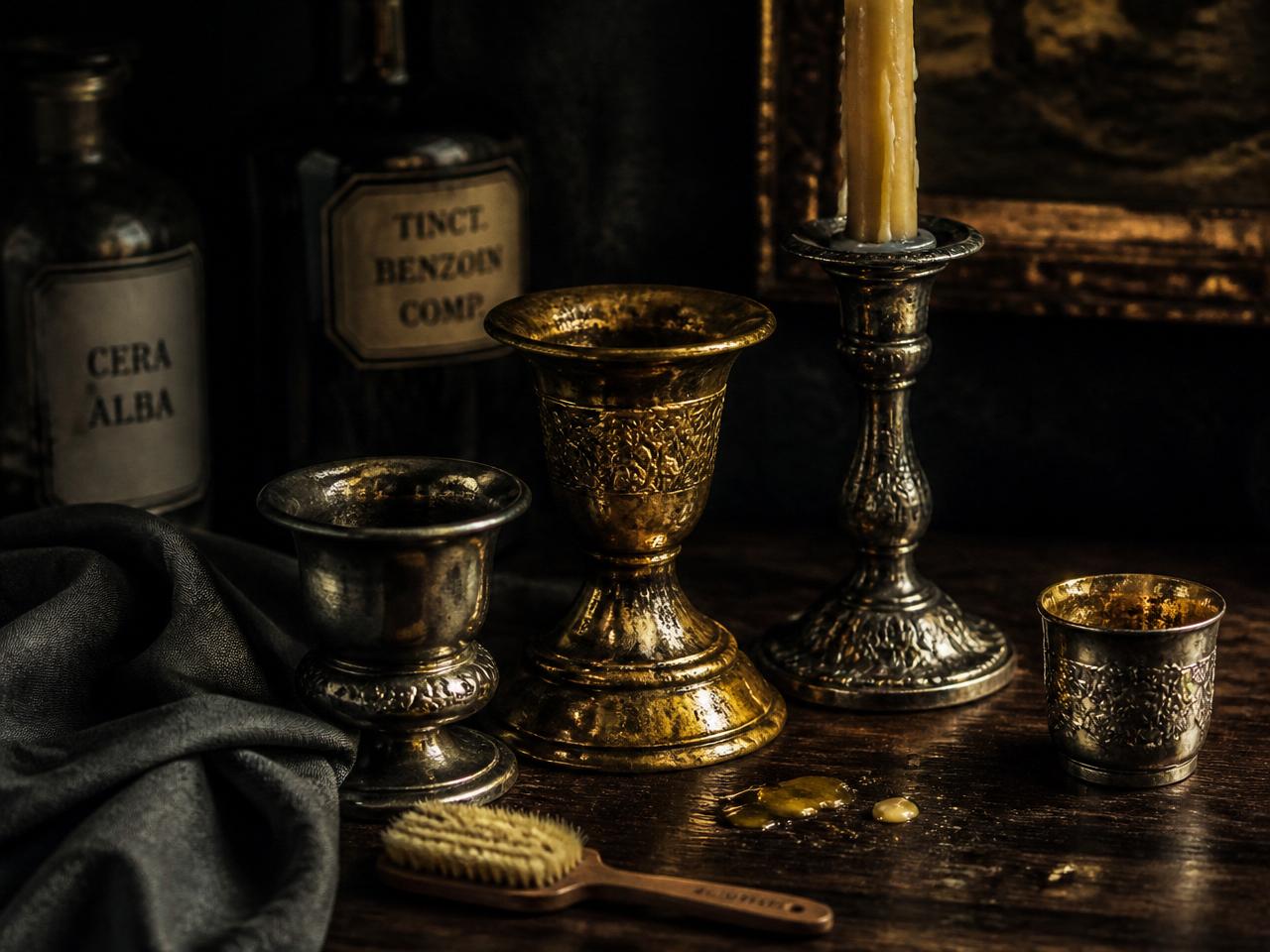
An antique vessel does not ask much of you. A little patience when the candle has burned to its end. A soft cloth, now and then. The willingness to treat metal and glass with the same care you would a letter written a century before you were born.
This is the method we use in the Laboratory, set down for collectors who would rather preserve than replace.
I. Releasing the Last of the Wax
When a candle has burned down, a thin disc of soy and the spent wick remain. Soy is forgiving. It does not bond to silver, brass, crystal, or porcelain the way paraffin can. Do not chisel. Do not pour boiling water into a cold vessel, particularly cut crystal or silver-mounted glass; the thermal shock can crack a piece that survived two world wars.
The freezer method, for most vessels:
1. Place the vessel upright in the freezer for two to three hours, uncovered.
2. Remove it and let it sit on the counter for one minute. The wax disc will contract away from the wall.
3. Slide a butter knife (never a metal blade with a sharp edge) along the inside edge. The disc lifts out in one piece.
4. Wipe any residue with a soft cotton cloth dampened in warm water and a single drop of unscented dish soap. Dry immediately.
For deep or narrow vessels where the disc will not lift cleanly, warm the vessel in a bowl of warm (not hot) water for ten minutes, pour the softened wax into a paper towel, and wipe with the same cotton cloth. Never pour wax down a drain.
II. Candle Wax on an Antique Wood Surface
This is the most common emergency. A taper tips, a votive overflows, and wax pools on a finish you cannot replace.
1. Let the wax cool and harden completely. Do not wipe while warm; you will press it into the grain.
2. Lay a brown paper bag (not glossy) over the wax. Set a warm iron, no steam, on the lowest setting on top of the paper for five to ten seconds at a time. The paper absorbs the melting wax. Move to a fresh section of paper and repeat until no more wax transfers.
3. Buff the area with a clean microfiber cloth. If a faint dulling remains, a thin coat of paste wax appropriate to the finish (carnauba for most antique furniture) restores depth.
Never use a metal scraper, a hair dryer on high, or solvent on a shellac or French polish surface. When in doubt, stop and consult a conservator.
III. Polishing Antique Silver
Tarnish is silver sulfide, the result of sulfur in the air bonding with the surface. Light tarnish is part of the patina that gives an antique piece its life. Aggressive polishing removes a microscopic layer of silver every time. Polish only when the tarnish has darkened to the point of obscuring the design.
For light tarnish:
- A soft cotton flannel, lightly dampened, then buffed dry. This alone keeps a piece in regular use looking honest.
For moderate tarnish:
- A non-abrasive silver cream (we use Goddard's or Hagerty). Apply with a cotton pad, never a paper towel. Work in small circles, then rinse with warm water and dry immediately with a soft cloth. Water left to evaporate on silver will spot.
What to avoid:
- The aluminum-foil and baking-soda bath. It works by electrochemical reaction and strips tarnish indiscriminately, including the darkened recesses that give chased and repoussé work its depth. A piece treated this way looks flat and new, never old.
- Toothpaste. The abrasives are too coarse for antique silver.
- Dishwashers. Heat and detergent destroy the patina and can loosen hollow handles set with pitch.
Store polished silver wrapped in acid-free tissue or anti-tarnish cloth. A piece of chalk in the cabinet absorbs ambient moisture.
IV. Polishing Antique Brass
Most antique brass has acquired a warm, mottled patina that collectors prize. Before you polish, ask whether the piece would lose value or character by being made bright again. Many would.
If polishing is the right choice:
1. Wash the piece in warm water with a drop of unscented dish soap to lift dust and oils. Dry completely.
2. Apply a small amount of Brasso, Wright's, or a similar non-ammoniated brass polish to a soft cotton cloth. Work in the direction of any existing brush marks, never across them.
3. Buff with a clean, dry cloth until no residue remains. Reapply only where tarnish persists.
4. To slow re-tarnishing, a thin coat of microcrystalline wax (Renaissance Wax is the conservator's standard) buffed to a soft sheen will protect the surface for months.
If the piece is lacquered (a clear coating applied at the factory), do not polish. Polish will cut through the lacquer in patches and create an uneven surface that can only be corrected by stripping and re-lacquering. Dust with a soft brush.
V. Cleaning Antique Crystal and Cut Glass
Crystal is more fragile than it appears. Old lead crystal is softer than modern glass and scratches easily; cut facets trap soap film that dulls the refractions that make the piece worth owning.
1. Line the sink with a folded towel. A dropped vessel against a porcelain basin almost always chips.
2. Wash in lukewarm water with a single drop of unscented dish soap. Cold water shocks; hot water can cloud old crystal.
3. For interior residue, fill the vessel with warm water, a tablespoon of white vinegar, and a teaspoon of uncooked rice. Swirl gently. The rice acts as a soft abrasive against the inner walls without scratching.
4. Rinse with distilled water (tap water leaves mineral spots on cut surfaces).
5. Dry immediately with a lint-free linen cloth, working into every cut and facet. Air-drying leaves spots that take weeks of polishing to remove.
Never put antique crystal in a dishwasher. The heat etches the surface permanently, a condition collectors call "sick glass."
VI. A Note on Repurposing
When you finish a candle and the vessel returns to you empty, you have a piece of history ready for its next life. A small silver cup becomes a holder for matches on the bar. A crystal coupe holds calling cards or a single white camellia. A brass apothecary jar carries loose tea on the shelf.
The vessels we send out are meant to outlast us. Care for them gently, and they will.