
Notes from the Estate Circuit
What we look for, and what we walk away from, when we travel for vessels.
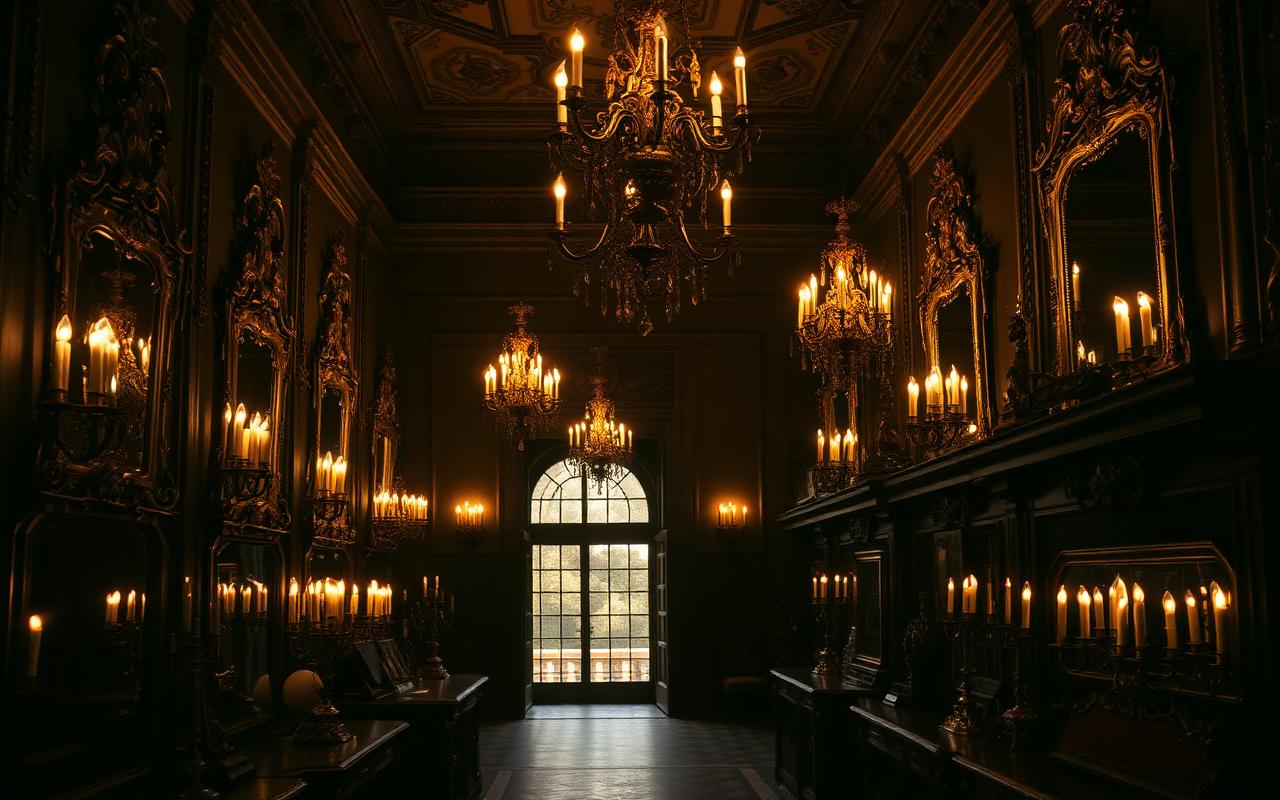
Most of what we sell was sourced in person, in rooms full of strangers, on weekends that started before sunrise. People sometimes ask whether we could just buy our inventory from a wholesaler and skip the early mornings. The answer is yes, technically, but the work would be different work, and we are not interested in that work.
THE MAP OF A YEAR
A typical year sends us to thirty or forty estate sales and a handful of regional auctions, mostly in the Northeast and the upper Midwest. We avoid the famous houses. The competition there is brutal, the provenance is over-documented in ways that inflate price without adding interest, and the pieces tend to have already been polished within an inch of their lives. We prefer the smaller country auctioneers, the ones who still print their catalogs in black and white and describe a Georgian sterling cup as just sterling cup, English. Those rooms still have bargains because the cataloging is honest about what is unknown rather than confident about what cannot be proven.
READING A CATALOG
An honest catalog uses qualifiers. Attributed to. In the manner of. Probably. Possibly. A catalog that confidently dates every piece to the decade and assigns every silver mark to a named maker is either lying or relying on research it didn't actually do. We trust qualifiers. We trust black and white photographs more than overproduced color ones, because color photography in auction catalogs almost always flatters. We trust short descriptions over long ones because the long ones are usually selling, not describing.
WHAT WE LOOK FOR FIRST
Weight, then mark, then condition, in that order. A piece that feels too light for its size is almost always replated, hollow, or compromised. A piece with a clear maker mark is twice as easy to research and twice as easy to sell honestly. Condition we evaluate last because almost any antique piece worth buying has condition issues, and the question is whether the issues are stable or progressing. A small ding on a brass cup is fine. Active green corrosion on the same cup is a deal-breaker.
WHAT WE WALK AWAY FROM
We walk away from anything with active corrosion on a metal piece. Bronze disease is a death sentence and it spreads. We walk away from heavily restored porcelain because the restoration is rarely as good as the seller claims, and a hairline crack will eventually telegraph through any glaze repair. We walk away from cut crystal with internal cloudiness that does not respond to a quick acid test. And we walk away, always, from anything sold with a story that is too clean. The estate circuit is full of attribution that cannot survive a phone call.
THE BIDDING DISCIPLINE
We set a maximum on every piece before the auction starts and we do not exceed it. This sounds obvious. It is the single hardest discipline of the work, because auction rooms are designed, architecturally and socially, to make you bid one more time. The bidder next to you is a stranger. You will never see them again. They do not deserve the satisfaction of pushing you past your number. Walking away from a piece you wanted is painful for ten minutes and instructive for the rest of your career.
THE HONEST MARKUP
Our markup over auction price is consistent: enough to cover the gas, the time, the cleaning, the photography, the storage, and a modest workshop margin. We do not add a premium for the story. The story is free. We will tell you everything we know about a piece, including what we do not know, because the alternative, fabricating provenance, corrupts the work. A made-up story sells one piece and damages the reputation of every piece you sell after it.
A NOTE ON CLEANING
Most vessels arrive in our workshop in worse condition than the photos in the auction catalog suggested. Tarnish, candle wax residue from a previous life, the faint chemical bloom of old polish. We clean conservatively. We do not buff, we do not replate, we do not erase the small evidences of use that prove a piece was actually used. A teaspoon of patina is worth more than a gallon of polish. Brass gets a wash with mild soap and a soft cloth. Silver gets a brief tarnish removal only on the high points, leaving the recesses dark for contrast. Glass gets vinegar and rice. None of this is exotic. All of it is patient.
WHY DO IT THIS WAY
We could buy bulk vessels from a wholesaler. The margins would be better and the photography would be easier. But the work would be different work. The estate circuit is slower, riskier, and more interesting. Each piece arrives with a fragment of a life attached to it, and we get to be the brief custodians who pass that fragment along to whoever lights the next candle inside it. The wholesaler version of the business would be more profitable and far less interesting, and we are old enough to know which of those two we care about more.
THE LONG DRIVE HOME
The best part of the job, honestly, is the drive home. The car smells like old brass and old paper. There is a list of what we bought and a smaller list of what got away. There is, almost always, one piece in the back that we did not plan to buy and cannot stop thinking about. Those are the pieces that end up on the home page. Trust the one you cannot stop thinking about. It will be the one a stranger cannot stop thinking about either.
ON SAYING NO TO A SELLER
Sometimes a seller approaches us at a sale and tries to push a piece directly, outside the auction. The piece is usually nothing special and the price is usually inflated. We have learned to say no quickly and warmly. The estate circuit is a small world, and a reputation for politeness travels faster than a reputation for taste. We would rather pass on a piece we wanted than buy one we did not, simply to avoid an awkward conversation. Saying no honestly today is the price of being trusted to look at better pieces tomorrow.
ON DRIVING WITH INVENTORY
Every piece in the back of the car is uninsured. We pack them in moving blankets and milk crates and we drive carefully. We do not stop for long meals. We do not leave the car unattended in unfamiliar parking lots. The drive home from a good sale is always longer than the drive there because we are paying more attention. A two-hundred-dollar cut-glass piece is not catastrophic to lose. A thousand-dollar Georgian sterling cup, freshly purchased, is not something you want to leave in a hot car at a highway diner. So we eat at the diner attached to the gas station, where we can see the car from the window. The romance of antiquing is, on the back end, mostly about logistics.
CLOSING
Most of what we do as a business is invisible to anyone who only sees the website. The early mornings, the cold rooms, the catalogs studied at midnight, the careful packing, the long drives. We are not complaining. It is the work we chose, and we chose it because it produces objects we are proud to ship. Every vessel on the shop page passed through that whole process. When you light a candle inside one of them, you are also, in a small way, lighting the end of a long Saturday spent in a cold room in a town you will never visit. We think that is worth something. We hope you do too.