
On Provenance: Why an Object's Past Matters
Every vessel we source carries a lot number, an era, and a story. Here is why we bother tracing it.
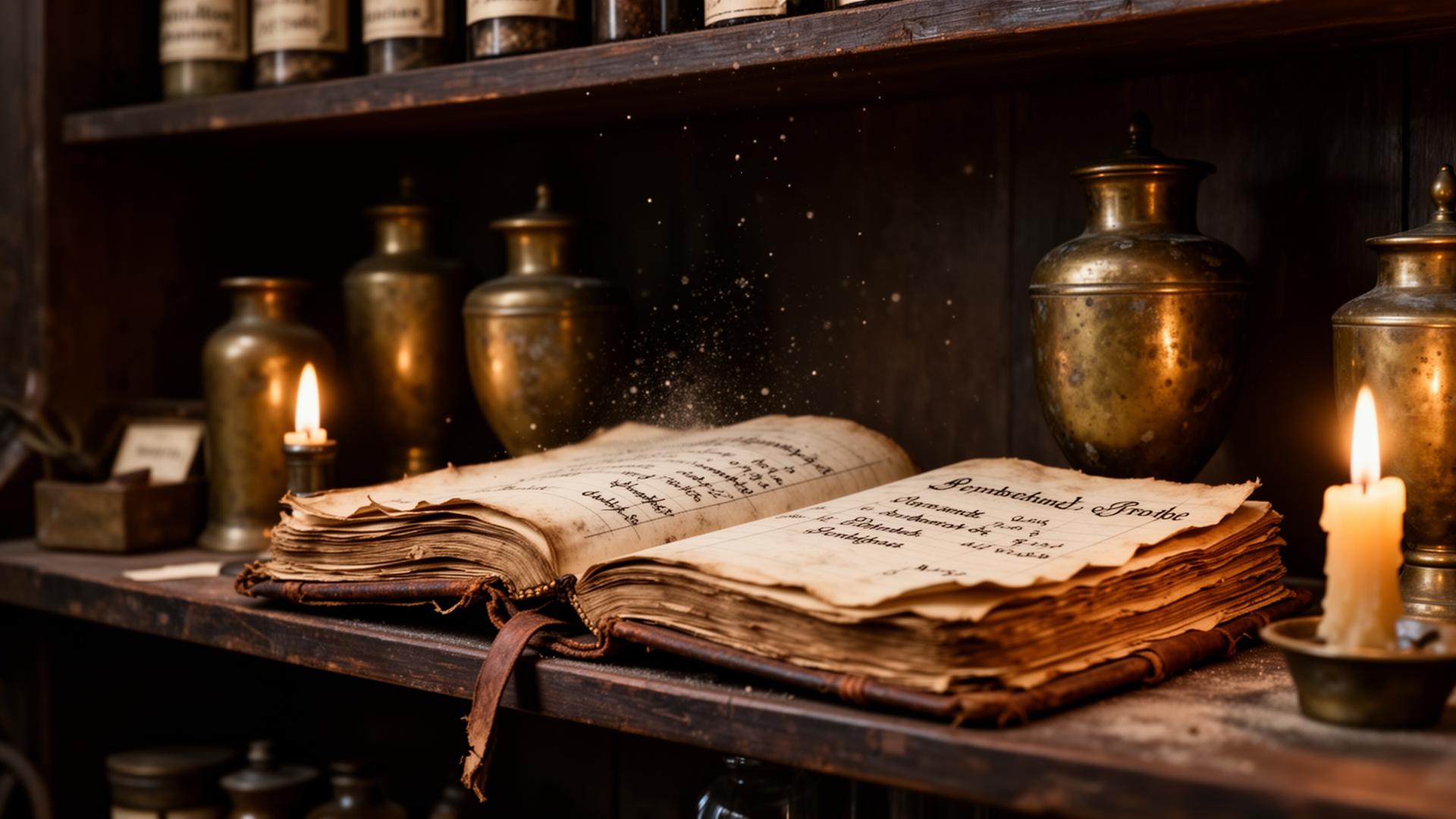
Provenance is one of those words that sounds like it belongs to museums and auction houses, something distant and a little intimidating. We use it constantly, and we use it on purpose, because we think it belongs to ordinary objects in ordinary homes far more than the antiques trade has been willing to admit. Provenance is not a credential. It is a story. And the story of where an object has been is, in our view, inseparable from what it is worth.
Every vessel we sell carries a lot number. That number is not decorative. It is the address of a small file we keep, in our studio, that records what we know and what we do not know about the piece. Where it came from, who sold it to us, what era it appears to belong to, what condition it was in when it arrived, what we did to clean it, and what we chose not to do. When the vessel ships, that file ships with it, in the form of a small printed card tucked beside the candle. We want the next owner to know what we know.
This is not how most of the antiques world works. Most of the antiques world has historically traded on mystery. The vague attribution, the polite "circa," the deliberate refusal to name a source. There are reasons for that opacity, some of them defensible and some of them very much not. Suppliers protect their hunting grounds. Dealers protect their margins. Some pieces, frankly, have provenance that nobody wants to look at too closely, because the chain of ownership runs through a war or a bankruptcy or an estate that was emptied without the family''s full consent.
We have made a decision, as a small house, to operate differently. We buy almost exclusively from estate sales, regional auctions, and a handful of pickers we have known long enough to trust their accounts. When we cannot verify a piece''s history, we say so. The card will tell you that the era is estimated, that the maker is unknown, that the provenance prior to the most recent sale is undocumented. That honesty matters more to us than the appearance of expertise.
Why does the past of an object matter at all? It matters because objects are how we keep time. A house is full of dates and decisions you can no longer remember, and the things you have chosen to live with are the ones that did the remembering for you. The vessel on your mantel may be older than your country. It has, statistically, been touched by people who are no longer alive, in rooms that no longer exist, during evenings whose contents have been entirely lost. When you light it, you are participating, briefly and without ceremony, in a continuity that you did not invent. That is not a small thing. We think it is, in fact, one of the only things.
Provenance is also a quality signal, though not in the way the auction world usually frames it. We do not care that a vessel was owned by someone famous. We care that it was made by a hand. The brass candlesticks we love most often have no maker''s mark at all, because they were turned in small regional foundries that did not bother to sign their work. The lack of a signature is not a defect. It is a feature of the period. Mass branding is a recent invention. For most of the history of domestic metalware, an object signed itself with its proportions, its weight, the particular sound it made when you set it on a wooden table.
We have learned to read those signatures. The base of a Victorian chamberstick has a particular flare, slightly heavy, designed to keep the candle from tipping when carried up stairs. An Edwardian taper holder is taller and narrower, made for the longer, slimmer candles of a more formal era. A mid-century American piece is often lacquered to a hard shine, which is itself a date stamp, because lacquering was a postwar shortcut that earlier makers would not have bothered with. None of these clues are conclusive. All of them are evidence.
We also pay attention to wear, which most of the trade calls damage and most of our customers, gratifyingly, call life. A small dent in the rim of a brass cup tells you the piece has been knocked off something at least once, which means it was used rather than displayed. Wax buildup in a seam, even old wax we choose not to fully remove, is a signature of a hundred forgotten evenings. The bottom of a candlestick, the part nobody looks at, is where you find the truest history: the scratches from being slid across a sideboard, the small marks where felt pads were attached and removed, the patina that develops only when a piece is set down and picked up by the same hands for decades.
This is why we do not over restore. There is a school of antique dealing, especially in metalware, that treats every old piece as a project: strip the tarnish, polish to a mirror, lacquer to a freeze, and offer it as essentially new. We find that approach a kind of vandalism. The patina is the document. Strip it and you have erased the history. The piece may shine, but it is no longer the piece it was. We clean carefully. We remove what is unstable, what is dirty, what would interfere with the safe burning of a candle. We leave the rest alone, because the rest is the reason you wanted it.
For pieces where the provenance is genuinely interesting, we say so in the listing. There is a candlestick in the shop right now that came out of a Pennsylvania farmhouse that had been continuously owned by one family for four generations. We have a brass urn we believe to be late nineteenth century English, sourced from a London dealer whose own grandfather kept the original sales record. There is a small chamberstick whose only known history is that it was found wrapped in a 1962 newspaper in the bottom of a tool chest at a Vermont estate sale. That last piece, with the most fragmentary record, is one of our favorites. The mystery is part of what it is.
When you receive a piece from us, we ask one quiet thing of you, and the request is non-negotiable in the sense that we trust you to honor it: keep the card. The lot number, the era, the notes on what we know and don''t know, those exist as a thread you can hand to the next owner. Tape it to the bottom of the vessel. Tuck it into a drawer. Photograph it and email it to yourself. The format does not matter. What matters is that the chain does not break at you. Most of the historical opacity in this trade exists because somebody, at some point in every object''s life, threw the documentation away. We are trying to slow that down.
Provenance, in the end, is humility. It is the recognition that you are not the first owner and you will not be the last. It is the willingness to write your name on a list that already has many names on it and will, with luck, have many more after yours. We think that is a generous way to live with objects. It is, in any case, the only way we know how to sell them.
The vessel arrives. The card is in the box. The candle is poured. The story is, briefly, yours. Light it.