Reading the Wax: Notes on Soy and Slow Burn
Why we use 100% soy, what a clean melt pool tells you, and how to get the most from every ounce.
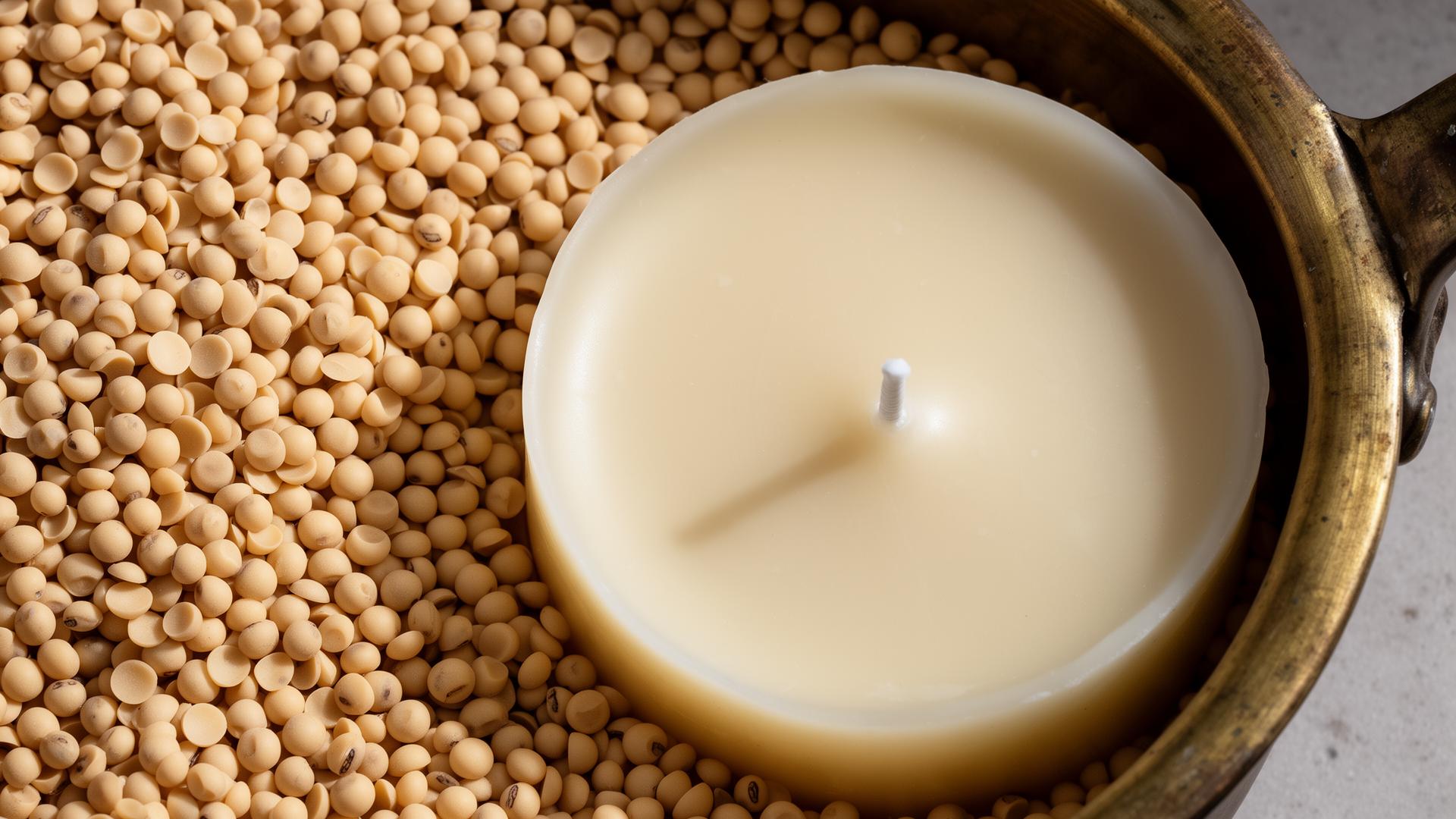
Soy wax is one of those materials that gets talked about constantly and understood almost never. It shows up on candle labels the way "natural" shows up on grocery shelves: a word doing more work than it is being paid for. We use only one hundred percent soy in every candle we pour, and we want to explain, in detail, why that decision matters and what it actually changes for the person sitting in the room with the lit wick.
Start with the obvious question. What is soy wax, really? It is hydrogenated soybean oil, processed into a solid that melts cleanly at a relatively low temperature, somewhere between one hundred and twenty and one hundred and eighty degrees Fahrenheit depending on the blend. It is renewable, biodegradable, and grown on land rather than pulled out of the ground. Compared with paraffin, the petroleum byproduct that still dominates the industry, soy is a different category of material entirely. Paraffin burns hotter, faster, and dirtier. Soy burns slower, cooler, and cleaner. Those are not marketing adjectives. Those are measurable behaviors.
Slowness is the first thing you notice. A soy candle in an eight ounce vessel will burn, on average, between forty and sixty hours, depending on draft, wick size, and how disciplined the burner is about trimming. A comparable paraffin candle of the same size will give you twenty to thirty. The difference is not subtle. You are buying twice the evening for the same volume of wax. That alone is worth saying out loud, because the per hour cost of a soy candle is almost always lower than the per hour cost of a cheaper paraffin one, even when the sticker price is higher.
But slowness is more than economics. It changes the experience of the room. A fast burning candle throws scent in a hot, urgent burst and then goes flat. A slow burning soy candle releases fragrance gradually, in a long, even breath. You stop noticing the candle as an event and start noticing it as an atmosphere. By the time the evening is half over, the scent is no longer something you smell on entry. It is the air itself. That is the burn we are designing for.
The second thing soy gets right is the cool pool. When a soy candle has been burning for an hour or two, the surface goes liquid. Touch the side of the vessel. It will be warm but not painful. The wax pool itself, while obviously hot, is far cooler than a paraffin pool, which is one of the reasons soy is safer in antique brass. Old metals do not love thermal shock. A paraffin candle in a thin walled antique cup can heat the metal aggressively enough to scorch nearby surfaces or warp a vintage solder joint. Soy treats the vessel kindly. It is one of the quiet reasons we can pour into pieces that are a hundred years old without worrying about ruining them.
There is also the matter of soot. Paraffin produces visible black soot, especially in drafts or when the wick is too long. You see it as the gray ring that creeps up the inside of a glass jar over time, and you breathe it as fine particulate in your living room air. Soy produces dramatically less. There is no such thing as a zero soot candle, but a properly wicked soy candle in a clean vessel will leave the inside of the cup essentially untouched after a full burn. That matters for the longevity of the vessel, and it matters more for the lungs of the people in the room.
Now the part nobody puts on a label. We do not add color. Not a drop. The wax we pour is the color it wants to be, which is to say a soft, slightly variable cream that can shift from nearly white to faintly buttery depending on the fragrance load and the ambient temperature when it cures. People sometimes ask if we will ever offer "a black candle, to match the brand." We will not. Coloring agents in candles are almost always petroleum derived, and they almost always interfere with the scent throw in measurable ways. They bind to fragrance molecules. They flatten the top notes. They change the burn profile in ways that mostly make the candle worse. The aesthetic gain, in our view, is not worth the chemical cost.
What you give up, when you commit to undyed soy, is a certain kind of visual drama. What you gain is a candle that smells like what it says it smells like. When we tell you a candle is fig and black tea, we mean those are the molecules you are going to encounter, in roughly the order and intensity we designed. There is nothing in the wax fighting them.
Reading the wax is, really, the practical skill we want every customer to develop. There are signals the candle gives you, and they are easy to learn. After the first burn, the surface should be liquid edge to edge before you extinguish. This is the memory burn. Soy has a memory. If you let it tunnel the first time, it will tunnel forever. Light it long enough, on the first sitting, to get a complete pool. Two to three hours is usually right for an eight ounce vessel.
After that, trim the wick before each light. A quarter inch is the target. Long wicks produce mushrooming, soot, and an uneven flame. A trimmed wick produces the clean, tall, slightly tapered flame that looks, frankly, the way a candle is supposed to look. If your candle is smoking, the wick is too long, the candle is in a draft, or both. Almost never the wax.
Watch the pool. A healthy soy pool is even, slightly translucent, and free of debris. If you see black flecks, that is wick char and it should be lifted out with the back of a spoon when the candle is cool. If you see frosting, that pale crystalline bloom on the top after the candle resets, do not worry. Frosting is a sign the wax is pure. Paraffin does not frost. Blended waxes do not frost. Only one hundred percent natural soy frosts, and only because the molecules are crystallizing in the way they would if you left soybean oil on a counter long enough. It is a feature, not a flaw.
Finally, the end of the candle is not the end of the candle. When the wick has burned down to roughly a half inch of wax left in the bottom, stop burning. Pour out any remaining wax once cool, wipe the vessel with a soft cloth, and the brass cup is ready to be repoured or returned to use as the object it has always been. Soy releases cleanly from metal. There is no scrubbing, no chemical solvent, no irreversible staining. The vessel survives the candle, which is the whole point.
We make these candles slowly because the wax requires it. We pour at lower temperatures than the industry standard, which produces a smoother top and a more reliable scent throw. We rest each candle for a full week before we ship it, because soy needs time to cure, and a candle poured one day and shipped the next is a candle that will not perform. None of this is dramatic. It is just attention. Soy rewards attention, and punishes shortcuts.
That is, in the end, the case for soy. It is slower. It is cleaner. It is honest about what it is. It treats the vessel with respect and the room with restraint. It asks a little more patience from the maker and gives a little more evening to the burner. We think that is a fair trade. We think the candle in front of you should reward the time you give it. And we think wax that has not been bullied into looking like something it isn''t will always burn better than wax that has.
The flame is doing the work. The wax is doing the work. The vessel is doing the work. We are mostly trying to stay out of the way.