
Sterling or Plate: Reading the Marks on the Bottom
A short field guide to hallmarks, EPNS, and why a plated cup is often the better candle.
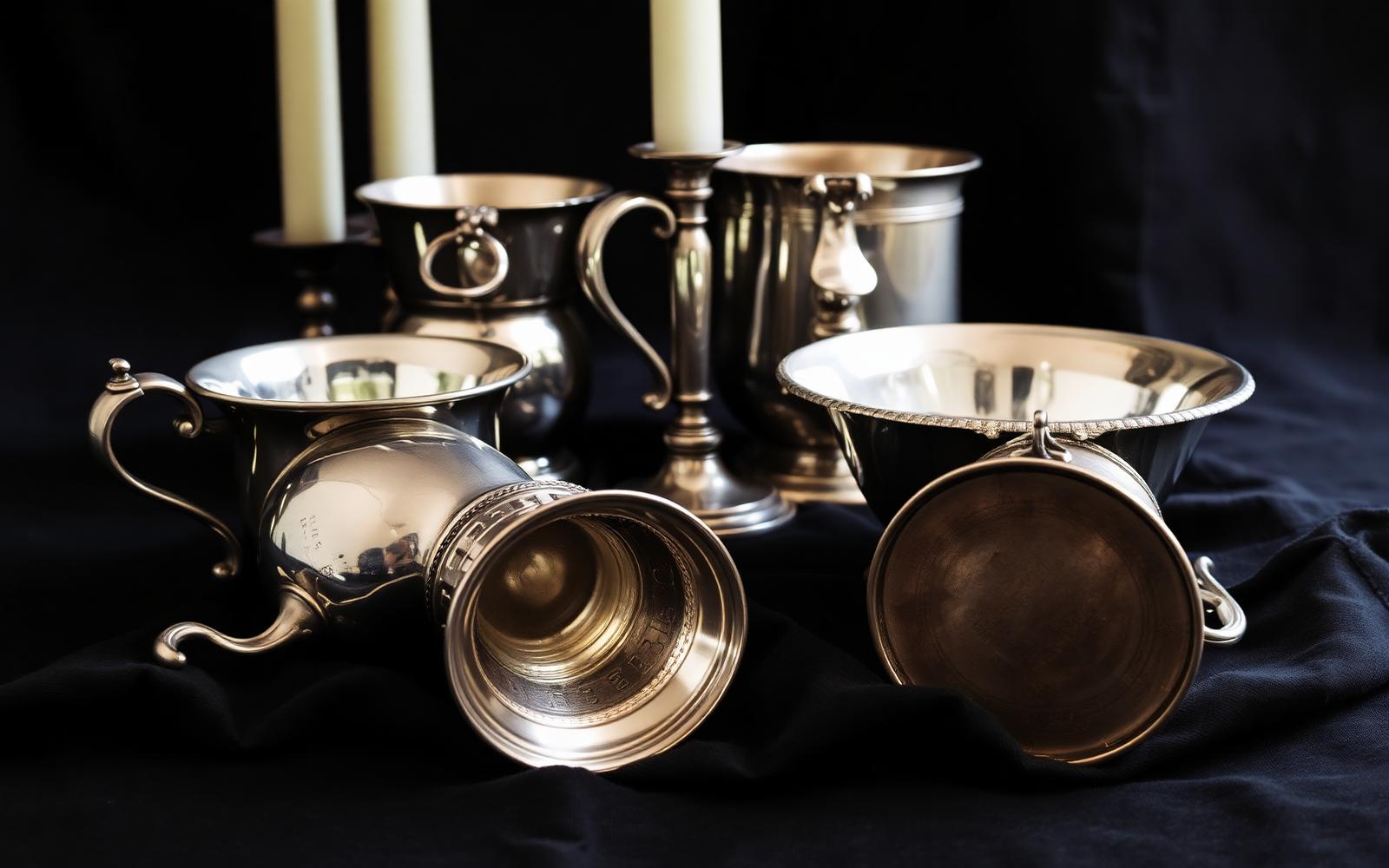
Turn the cup over. Almost everything worth knowing about a silver vessel is written on its underside, usually in letters small enough to require a lamp and a bit of patience.
American pieces are the easiest. The word STERLING, or the number 925, means the metal is 92.5 percent silver. You will often find a maker beside it, and sometimes a pattern name. English pieces speak in pictures instead of words: a lion passant for sterling, a letter for the year, a small profile for the assay office. A mark you cannot read is not a warning sign. It usually just means the piece has been polished for a century and the stamp has softened.
Then there is plate. EPNS stands for electroplated nickel silver, which is a base metal wearing a thin coat of real silver. EP, A1, and quadruple plate all point in the same direction. Collectors tend to shrug at plate. We do not.
A plated cup is frequently the better candle vessel, and here is why. Plate was made to be used, so the shapes are more generous and the walls are thicker. It costs a fraction of sterling, which means we can pour it, sell it, and see it lit in someone kitchen rather than parked behind glass. And plate wears beautifully. When the coat thins at the rim and a warm copper tone comes through, the vessel starts telling the truth about its own life. That is not damage. That is provenance you can see from across a table.
What we do avoid, sterling or plate, is anything with a soldered seam sitting where the melt pool will form, or a hollow foot with a wooden or resin insert. Heat finds those weaknesses first.
If you are holding something and cannot make sense of the marks, photograph the bottom and send it to us. Reading them is one of the better parts of this work.