
The Art of the Pairing: Matching Scent to Vessel
A vessel and a scent are two halves of the same sentence. Here is how we think about completing it.
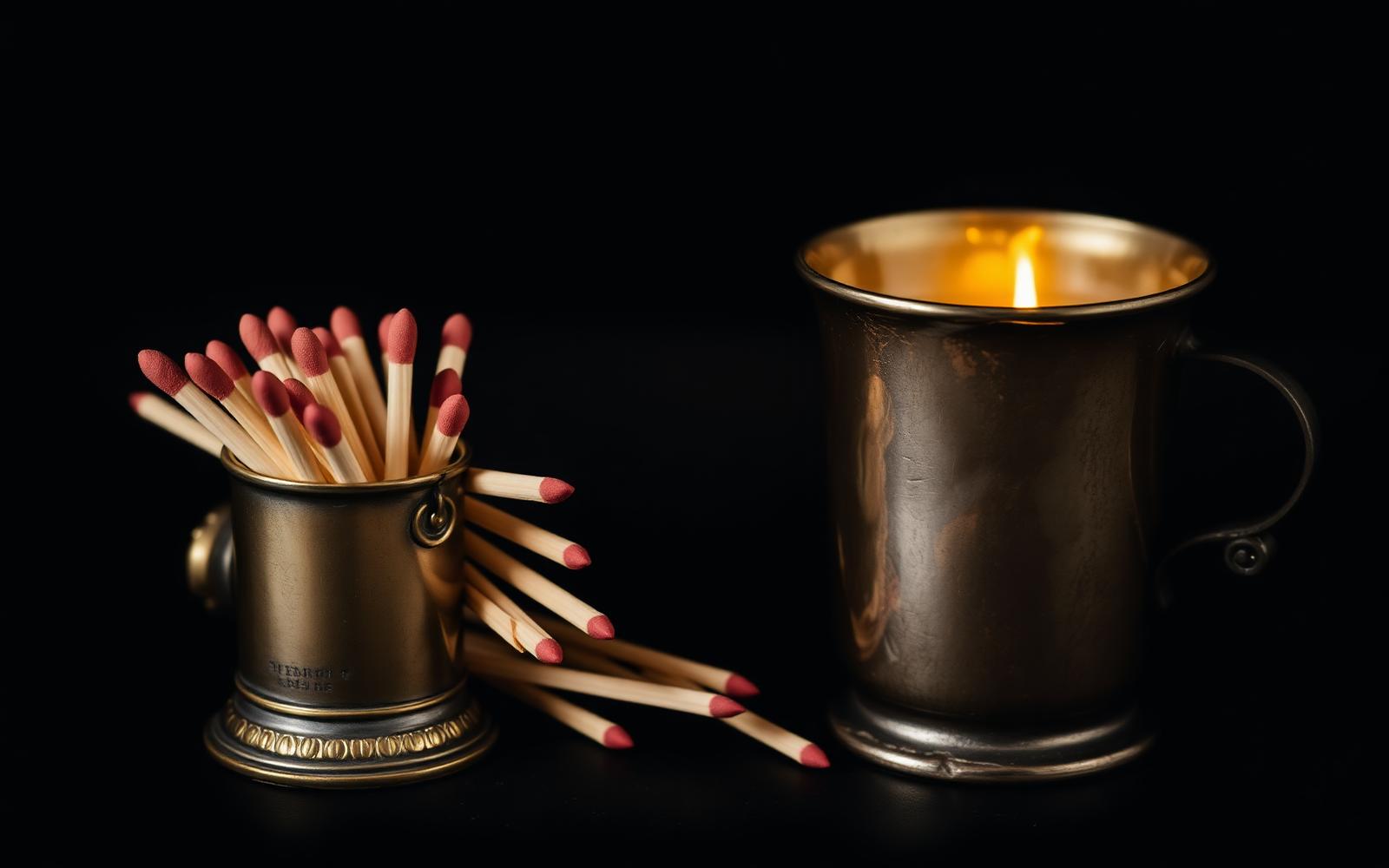
There is a temptation, when you work with objects as old as the ones we find, to treat the vessel as a container and the scent as a product. As though the cup is the packaging and the wax is the thing being shipped.
We do not think of it that way. A vessel and a scent are two halves of the same sentence, and the finished candle is only as good as the grammar between them.
Brass wants warmth. A tarnished brass match striker or a low julep cup carries a color that reads as amber before you light anything at all. Pour something resinous into it, something with labdanum or myrrh in the base, and the metal and the fragrance finish each other. Pour something sharp and green into that same cup and the vessel will fight you for the whole burn.
Silver wants florals. A plated julep cup has a coolness to it that reads as winter even in July. White florals, jasmine, neroli, the things that sit high and clear on the first light. Silver does not want smoke. It wants something that lifts.
Cut crystal wants depth. The reason we love crystal for candles is not the glass itself but what the flame does to it. A hand-cut tumbler throws light like a prism, but only if the scent is full enough to fill the room. A thin fragrance disappears against that geometry. Give crystal something with a long base. Amber, sandalwood, vanilla. Scents that arrive slowly and stay.
Porcelain wants softness. A teacup is a quiet vessel. It does not want to shout. Powdery florals, light musk, a hint of bergamot. Scents that feel like the room already smelled that way before you walked in.
The wrong pairing is not a disaster. A green scent in a brass cup still burns. But the right pairing is the difference between a candle you light because you have guests and a candle you light because the room asked you to.
When a customer brings us a vessel, the first question is not what scent they want. The first question is what the vessel wants. Sometimes they are the same thing. Often they are not, and that is where the work begins.