
The Discipline of the Trimmed Wick
Why a quarter inch of cotton is the difference between a candle that lasts and one that fails.
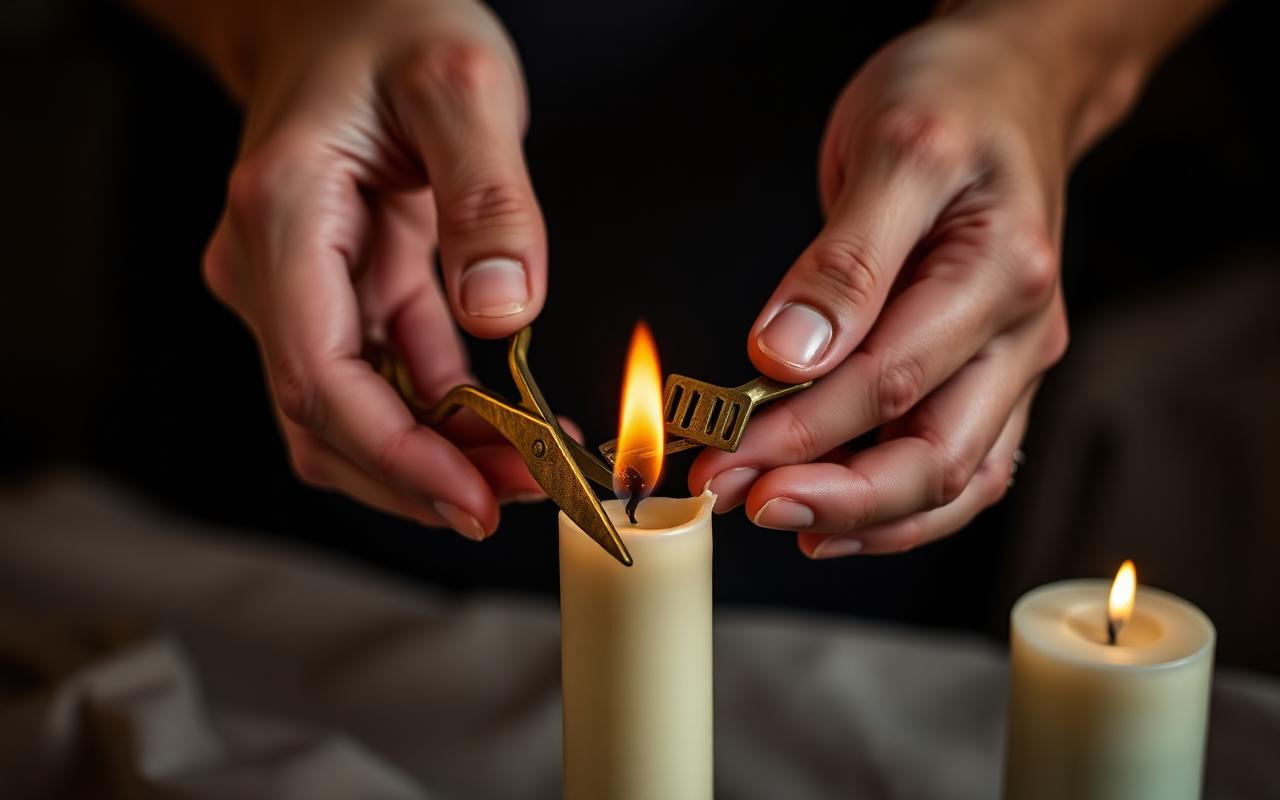
Of all the small disciplines we recommend, none returns more value for less effort than trimming the wick. We include this advice in every shipment, and we still get notes from customers asking why their candle smoked, tunneled, or blackened the inside of an antique vessel. The answer, almost always, is the wick.
WHAT AN UNTRIMMED WICK DOES
A wick left untrimmed grows a mushroom of carbon at its tip. That carbon is unstable. It throws sparks, drops into the wax pool, and smokes. The flame itself grows tall and yellow, which seems romantic until you notice the soot climbing the inside wall of your vessel. Within three or four burns, an untrimmed wick will blacken even the cleanest piece of antique glass beyond easy cleaning. The soot is fine carbon, and it bonds to the silica of the glass at the molecular level. Once it's there, it is there until you scrub it with a soft brush and a non-abrasive cleaner, and even then a faint shadow may remain.
WHY A TALL FLAME IS THE WRONG GOAL
First-time candle owners often want a tall, dramatic flame. They equate flame height with light output and with romance. They are mistaken on both counts. A tall flame is an inefficient flame. It is incomplete combustion, which means it produces more soot and less heat per unit of wax consumed. A short, steady flame, the size your thumbnail, is the goal. It produces a clean burn, a clear melt pool, and the maximum throw of fragrance because the wax is being heated to the right temperature rather than scorched.
THE QUARTER INCH
A quarter inch is the magic number. Shorter and the wick will drown in its own pool. Longer and it will smoke. Quarter inch, every time, before every lighting, with the candle cold. We include a small pair of brass wick scissors with select pieces because the right tool makes the discipline easier to keep. Wick scissors are angled so the cut piece falls away from the wax rather than into it, which matters more than it sounds like it should.
HOW TO TRIM WITHOUT A TOOL
If you do not have wick scissors, use a fingernail. Pinch the carbon mushroom between your thumb and forefinger and snap it off. The carbon is brittle and will not stain your fingers if the candle is fully cold. Discard the fragment. Do not let it fall into the wax. We have seen otherwise pristine candles ruined by a single black fragment circulating in the pool like a piece of wreckage. If a fragment does fall in, fish it out immediately with a toothpick before lighting. A cold pool will release it cleanly. A hot pool will not.
THE FIRST BURN
The first burn of any candle sets the pattern for every burn after it. The wax has a memory. If you light a new candle for only thirty minutes, the pool will not reach the edge of the vessel, and a ring of unmelted wax will form. Every subsequent burn will tunnel down inside that ring, wasting up to a third of the wax. The first burn should always be long enough to melt the entire surface to the wall, usually two to three hours for our standard sizes. If you cannot commit to that on the first lighting, wait. The candle will keep.
SNUFFING, NOT BLOWING
When you blow out a candle you push smoke and unburned hydrocarbons across the room and you displace molten wax onto the rim. When you snuff a candle you cut the oxygen supply cleanly, the wick stops glowing within seconds, and the wax pool stays where it should. A small brass snuffer is one of the least glamorous tools in any kitchen drawer and one of the most useful. A second-best alternative is to dip the wick into the wax pool with a pair of tweezers and then lift it back out, which extinguishes the flame and pre-coats the wick with wax for an easier next lighting.
STORING BETWEEN BURNS
Keep the candle covered between uses if possible. A simple lid, or even an inverted teacup, keeps dust out of the pool and protects the fragrance. Soy wax is a sponge for ambient odors. A candle stored next to a stack of garlic will, six weeks later, smell faintly of garlic. We learned this the hard way. Store candles out of direct sunlight as well. UV light degrades fragrance oils and yellows the wax surface.
WHEN THE VESSEL OUTLASTS THE WAX
Eventually every candle finishes. The vessel does not. Once the wax is gone, the vessel is yours to use however you like. We recommend the freezer trick: place the empty vessel in the freezer for four hours, then pop the wax remnant out with a butter knife. Wash the vessel with warm soapy water, dry it, and it is ready for its second life. We have seen our brass cups returned to use as desk caddies, our porcelain pots holding paperclips, our cut-glass tumblers serving cocktails. The candle was always temporary. The vessel was the point.
THE CUMULATIVE EFFECT
Trim, snuff, cover. Three small acts, performed in sequence, that together can double the usable life of a candle and keep its vessel clean enough to outlast you. The discipline is not difficult. It is only easy to forget. We mention it in every shipment because the candle deserves it, and so does the vessel.
DIAGNOSING A SICK CANDLE
When a customer writes to us about a candle that is misbehaving, we ask three questions before anything else. How tall is the flame. How long was the first burn. When was the last time the wick was trimmed. Nine times out of ten, one of those three answers explains the problem. The tenth time is usually a draft: a candle near a vent, a window, or a ceiling fan will burn unevenly no matter how well you maintain it. Move it eighteen inches and the problem disappears. Wicks are not magic and they are not delicate. They simply need the conditions they were designed for, which are still air and a quarter inch of cotton.
CLOSING
We sometimes wonder whether to keep including a wick-care card in every shipment. It feels paternalistic. But then a customer writes to thank us for it, and we keep printing them. The candle is a small machine. The wick is its only moving part. A minute of attention before each lighting is the price of admission. It is, frankly, less effort than making a cup of coffee, and it returns a great deal more.