
The Evening Ritual
A short essay on lighting one candle, on purpose, at the same time each night.
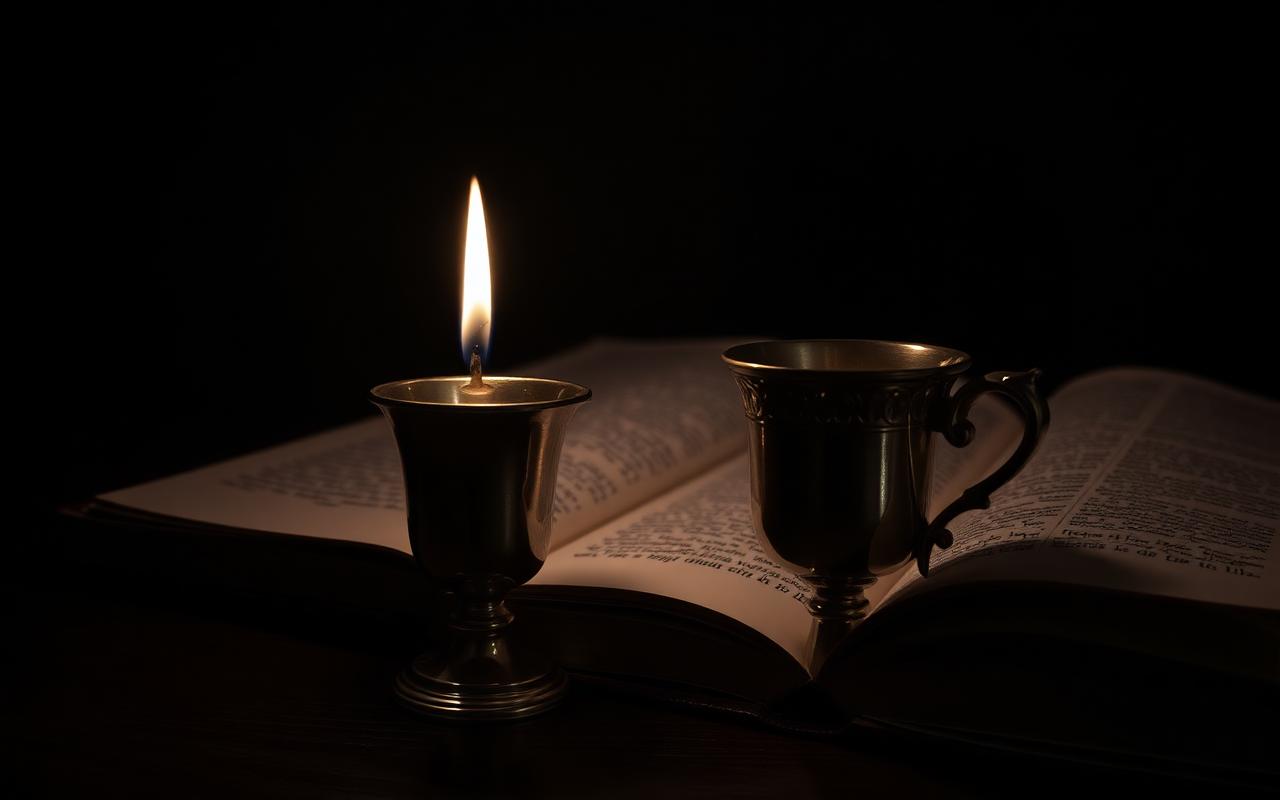
The simplest ritual we know costs nothing but a match, takes less than a minute to perform, and reorganizes the rest of the evening around it. We are reluctant, generally, to recommend lifestyle practices in this journal. But this one we recommend without reservation, because it is the practice that taught us why we make candles in the first place.
THE CASE FOR REPETITION
Modern life is allergic to repetition. We are urged, constantly, to vary, to optimize, to refuse the rut. But ritual is not a rut. A rut is repetition without attention. A ritual is repetition with attention, and the attention is the whole point. Lighting one specific candle, in one specific spot, at one specific time, is a way of telling the day that it has a shape. Without that shape, evenings tend to dissolve. You sit down, you scroll, you look up two hours later, you go to bed faintly disappointed. The candle is a small obstacle in that flow, and a small obstacle is sometimes all you need.
CHOOSING THE CANDLE
It does not need to be expensive. It needs to be yours. Pick a vessel you will not begrudge the wax stains on. Pick a scent you can live with for an hour at a time, every night, for a month. Most people overestimate how strongly scented they want their evening candle to be. The point is not to perfume the room. The point is to make a small, warm event. A quiet wax, lightly fragranced, almost always wins. If the scent is too loud, you'll resent it by week two and the ritual will collapse.
CHOOSING THE SPOT
The spot matters more than the candle. It should be visible from where you usually sit. It should not be in front of a window that draughts. It should be on a surface you trust, ideally with a small dish or coaster underneath. We light ours on a low oak table in the living room, three feet from the chair where the reading happens. Once you have chosen the spot, do not move it. The whole point of a ritual is that the body learns it without consultation. If the candle is in a different place every night, your body has to think, and thinking is the enemy of the ritual.
CHOOSING THE HOUR
We recommend the hour just after dinner, before screens reassert themselves. If you light the candle while the kitchen is still warm and the dishes are draining, the room will already be cooperating with you. If you wait until you are tired and slumped, the ritual becomes one more chore. Catch the evening at its hinge, not at its end.
THE MATCH MATTERS
Use a long wooden match if you can. Lighters are efficient and ugly. A wooden match strikes with a small, dry sound, releases a thread of sulfur, and gives you two seconds to do nothing but watch a flame. Those two seconds are part of the ritual. Do not skip them. We keep a glass of long matches beside the candle, and refilling that glass is itself a small monthly ritual that we have come to look forward to.
WHAT TO DO WHILE IT BURNS
This is the question people get wrong. They light the candle and then immediately do something else, and an hour later they blow it out without having looked at it once. A ritual candle wants company, at least at the start. Sit with it for the first five minutes. Read something on paper. Write three sentences in a notebook. Drink something warm. After that, you are released. The candle will keep its watch. The first five minutes are payment for the next hour.
TRIMMING AND SNUFFING
Trim the wick to a quarter inch before each lighting. Snuff the flame, do not blow it. A snuffer keeps the wick centered and the wax pool clean. These are small disciplines, but they extend the life of the candle by hours and the life of the ritual by months. A ritual that breaks because the wick drowned in tunneled wax is a sad, avoidable thing.
WHEN YOU TRAVEL
The ritual does not have to follow you when you travel. In fact, it is better if it doesn't. Part of what makes the evening ritual valuable is that it belongs to a specific place. Coming home from a trip and lighting the candle for the first time in a week is a small, satisfying punctuation. The candle becomes, in your absence, a stand-in for the home itself. Lighting it is the gesture that says you are back.
WHY IT WORKS
The evening ritual works because it is small enough to actually do, every night, even when you are tired. It does not require a free hour or a clean room or a clear head. It requires a match and a minute. Everything else, the calm, the punctuation, the sense of a day having ended on purpose, follows from that one struck match. A whole shelf of antique vessels in our workshop has been put to this use, in homes we will never see. We like to think of them, all lit at roughly the same hour, all over the country, doing the same small honest work.
SHARING IT, OR NOT
The ritual works alone. It also works with one other person, if that person agrees to the rules. It does not work with a group. A group converts the ritual into a performance, and the candle becomes a centerpiece rather than a focus. If you live with a partner, decide together whether the candle is a shared event or a private one. Both are valid. We know households where each adult has their own evening candle in a different room, lit at the same hour. We know others where one candle serves both. There is no correct answer except the one you actually keep.
CLOSING
We did not invent the evening ritual. People have been lighting one candle, on purpose, at the same hour, for as long as people have had candles. We are simply pointing at a practice that already works and that costs you almost nothing to begin. Pick a vessel from the shelf. Pour something quiet into it. Set it where you will see it. Strike a long match tomorrow night. Do it again the night after that. Within two weeks, you will not remember why you ever thought you needed anything more elaborate.