
The Quiet Authority of Brass
On the warmth of aged metal and why a tarnished vessel often outshines a polished one.
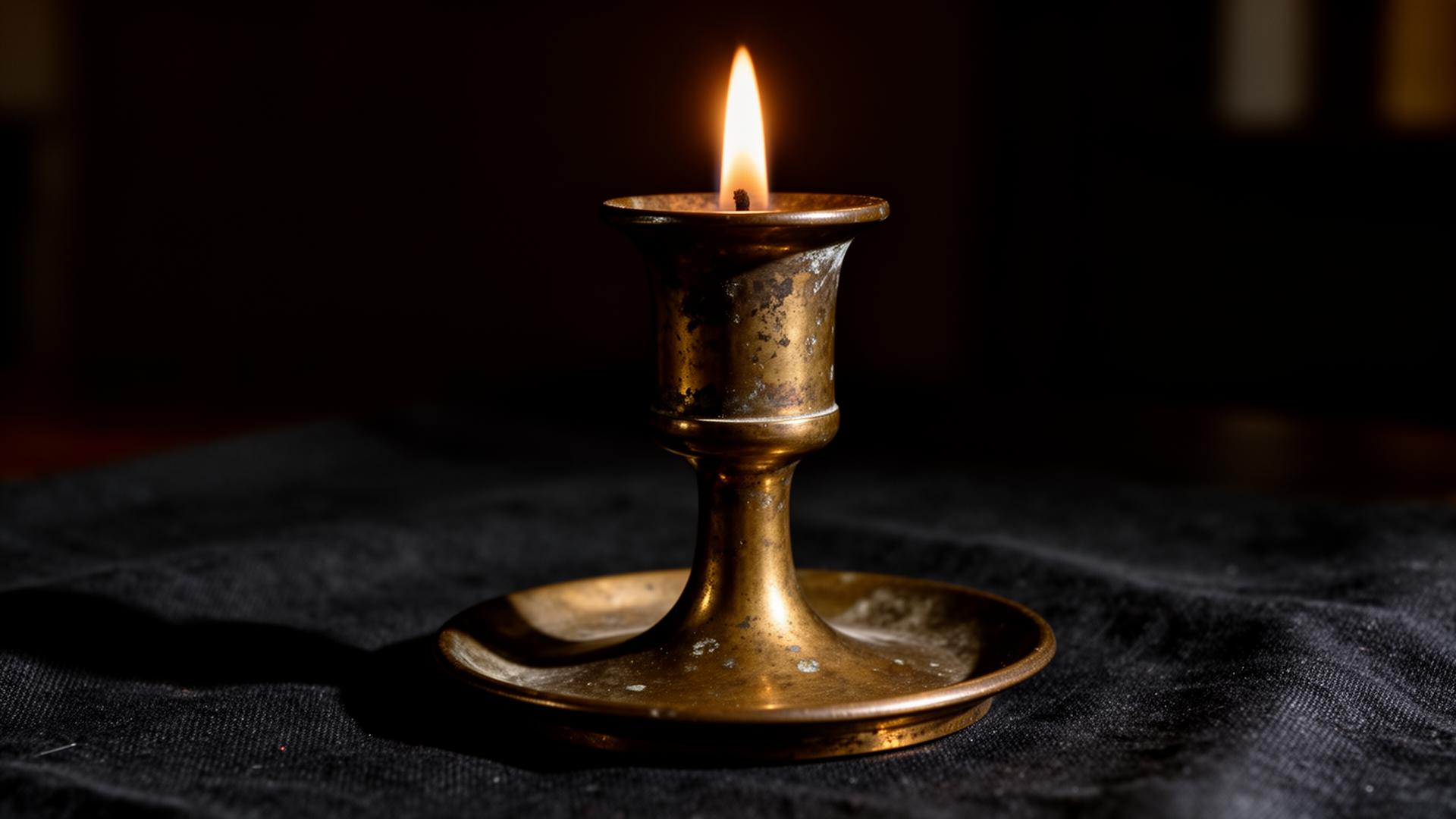
There is a particular silence that gathers around a piece of brass that has lived a long life. Stand close to a candlestick that has been passed from one century into another and you can feel it: a kind of held breath, the weight of evenings already spent. Brass does not shout. It hums. And that hum is what we have built this house around.
We are often asked why we keep coming back to brass. There are easier metals to source. There are cheaper vessels to pour into. There are finishes that photograph more obediently under studio lights. But brass has a quiet authority that none of the alternatives can borrow. It has to be earned, slowly, over decades of being touched, lit, dimmed, set on a sideboard, forgotten, found again. The patina is the proof.
Walk through any estate sale long enough and you begin to develop an eye. You stop seeing brass as one material and start seeing it as a vocabulary. There is the cold yellow brass of a Victorian chamberstick, made for a servant to carry up a back staircase. There is the redder, almost rose tone of an Arts and Crafts piece, hammered by hand and intentionally left a little rough. There is the lacquered, mirror-bright brass of mid-century American domestic ware, made for a newly suburban dining room and a newly confident middle class. Each tells you something about who poured it, who bought it, and what they hoped a candle on a table might mean.
The brass we keep is almost never the bright kind. We are drawn to vessels that have already done their work. The tarnish, the small dents, the wax that has crept into a seam and stayed there for forty years, these are not flaws to be polished away. They are biography. We clean them carefully, we do not strip them. The goal is never to make an antique look new. The goal is to give it a second working life without erasing the first.
There is also a practical case for brass that we should not pretend doesn't matter. It conducts heat evenly. It tolerates the long, slow burn of a soy candle without warping or cracking the way thinner glass sometimes does. It holds a wick straight. It sits heavy on a table, which means it is not knocked over by a sleeve or a cat. A well made brass vessel is, frankly, a better candle holder than almost anything being manufactured now. We did not invent that. We just stopped ignoring it.
What we did invent, or at least insist on, is the marriage of that vessel to a candle worthy of it. We pour only one hundred percent soy wax. No paraffin blends, no proprietary mystery waxes, no dyes. The wax we use is the color it wants to be: a soft, off-white cream that goes nearly translucent when it pools. It is not glamorous in the jar. It is glamorous when it is lit, which is the only moment that actually matters.
People sometimes ask why we refuse coloring. The honest answer is that color is almost always a compromise. Most candle dyes are petroleum based and they smoke. They also flatten the scent profile by binding to fragrance molecules in ways that mute the top notes. We would rather have a candle that smells like what it claims to smell like and looks like what it actually is. There is a kind of confidence in undyed wax that we find more beautiful than any color we could add.
The pairing of vessel and wax is not incidental, and it is not a marketing story. It is a working choice. An antique brass vessel built in 1890 was made for a tallow or beeswax candle. Soy is the closest modern analog: clean burning, slow, low soot. It respects the metal. It does not stain or pit the inside of the cup. When the candle is finished, the vessel is still itself, ready to be repoured or ready to return to being simply a beautiful object on a shelf. Nothing is wasted. Nothing is consumed that cannot be renewed.
This is, in the end, what the quiet authority of brass is really about. It is an argument against disposability. The vessels we sell were not made to be thrown out, and the candles we pour into them are not the end of the vessel''s life. They are one more chapter. When you buy a Black Flame piece, you are not buying a scented decoration. You are stepping into the middle of an object''s biography and agreeing to carry it forward.
We think a lot about the next hands. Almost every vessel in our shop has outlived several owners already. It has sat on a mantel in a house we will never see, listened to conversations we will never hear, watched a hundred small dinners and a few enormous ones. It has been a wedding gift, an inheritance, a thrift store rescue. Now it sits in our studio, waiting for the next person who will see it for what it is.
When we light a candle in one of these vessels for the first time, there is always a moment of recognition. The brass warms. The wax begins to release its scent. The flame settles into a tall, steady shape that looks, frankly, exactly like every flame that vessel has ever held. Nothing about the experience is new. That is the point. We are not in the business of novelty. We are in the business of continuity, of putting old things back into use the way they were always meant to be used.
If you have one of our pieces in your home, we would say this: do not save it for a special occasion. The vessel did not survive a hundred and thirty years of dinner parties to be set aside for one. Light it on a Tuesday. Light it while you cook. Light it because the rain is coming in sideways and the room needs a center. The point of a working antique is that it works.
Brass will keep doing what brass does. It will warm under your hand. It will tarnish a little more, in ways particular to your house, your air, your routines. In ten years it will look slightly different than it does now, and that difference will be yours. You will have added a sentence to a very long story. That is, we think, the only honest definition of a good object: one that asks you to participate in its life rather than merely owning it.
The flame is small. The vessel is old. The room goes a little quieter. That is the whole proposal.