
The Winter Cellar: Building a Scent for Cold Rooms
Cold air holds fragrance differently. Notes on resin, smoke, and the scents that carry through a January room.
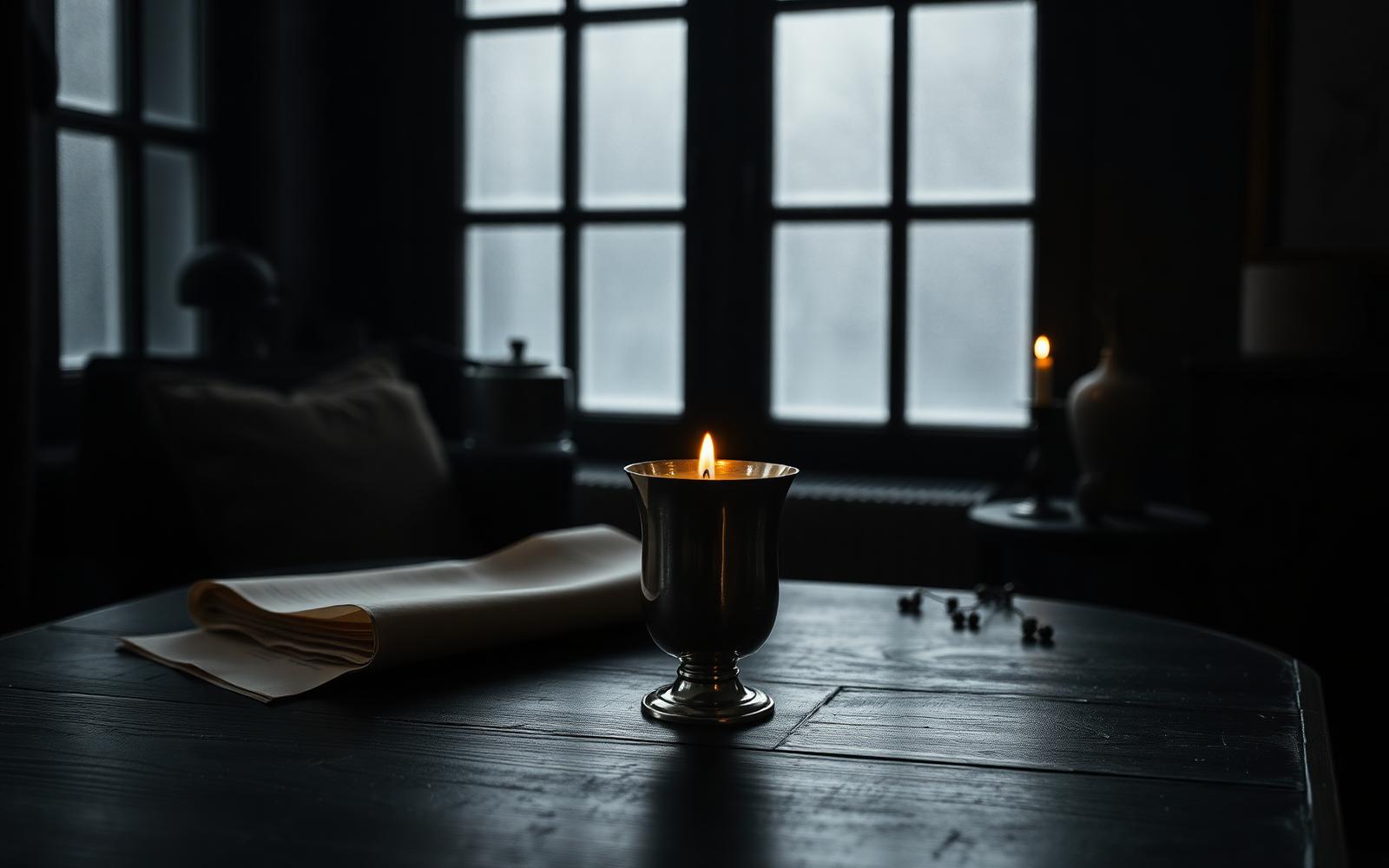
Cold air is a poor courier. In summer, a candle throws its scent across a room almost without being asked; the warmth does half the work. In January, in a room with the windows shut and the floors gone stiff, the same candle can feel like it is whispering from another house entirely.
So we build differently for winter. The top notes get pulled back. Bright citrus and green herbs are lovely in April and nearly invisible in a cold room, because they burn off before they have anywhere to travel. What survives is weight: resin, wood, cured tobacco, a little smoke.
Labdanum and benzoin do the heavy lifting. They are sticky, slow, faintly sweet materials that cling to the air instead of rising through it. Add fir or cedar and the whole composition gets a spine. Add a thread of clove or black pepper and it reads as warmth rather than as sweetness, which matters, because a cold room does not want dessert. It wants a fire.
The vessel matters more than people expect. Silver and brass conduct heat outward, which widens the melt pool and gives the scent a larger surface to leave from. Cut crystal holds heat closer and burns more patiently. On a winter evening we tend to reach for metal, and we let it burn a little longer than we would in July, an hour and a half at minimum, so the pool reaches the wall of the cup.
One practical note. A cold vessel poured with warm expectations will tunnel. Let the candle sit in the room for an hour before the first light, especially if it has just come in from a delivery truck. Wax that is too cold takes the wick down with it.
Everything we pour is 100% soy with no artificial coloring, so what you smell in winter is the fragrance and the wax, nothing else standing in the way.